Pages

November 22, 2014

Makerclub Helps You Learn 3D-Printed Robotics

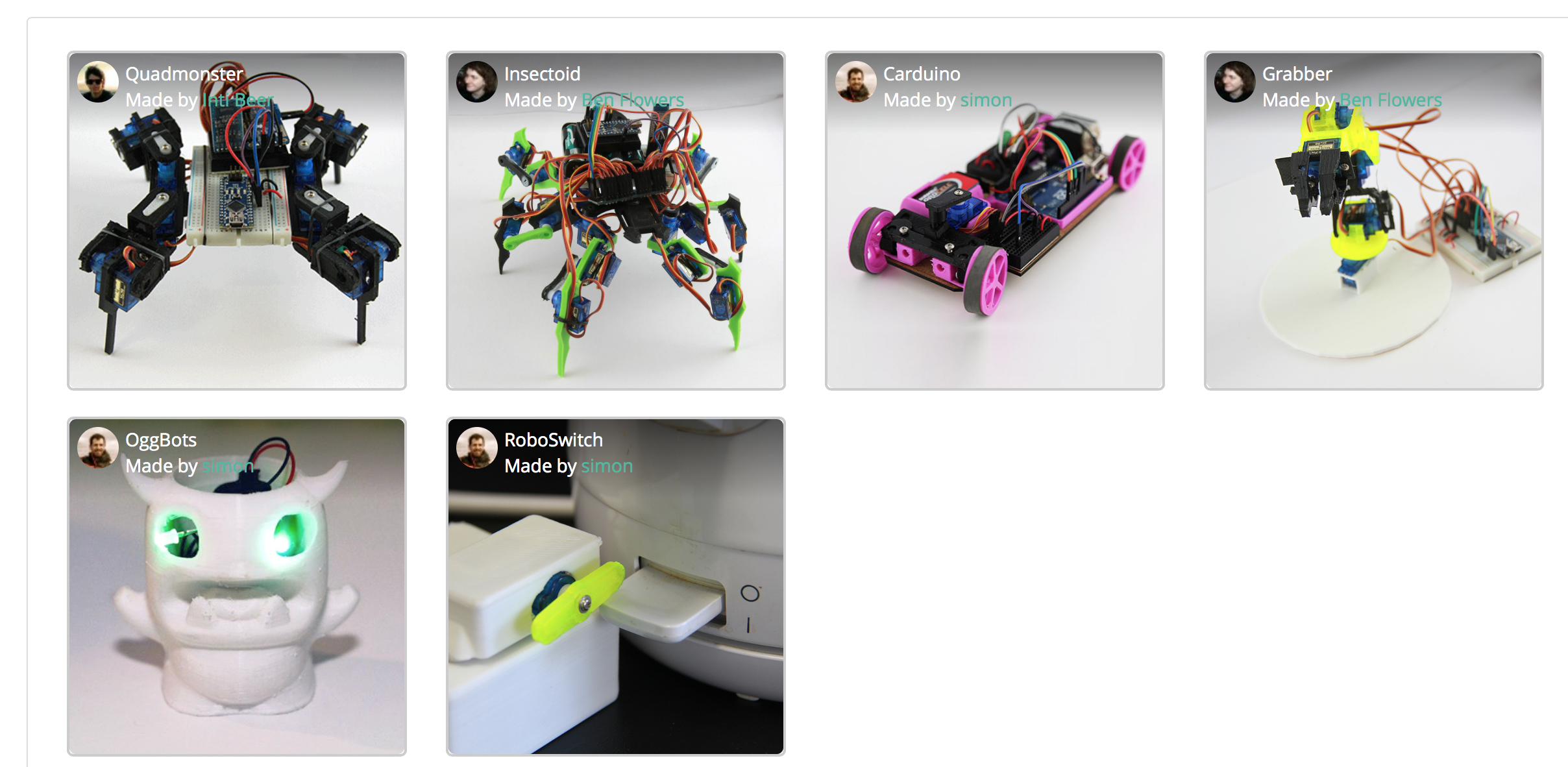
Want to make a giant 3D-printed spider robot? A humanoid help-mate? A robotic scorpion with a powerful, electrified tail? Makerclub can probably help. Created as a place for makers to come together and discuss 3D printed robotics, the service is now part commerce site, part repository, and part educational resource. Interestingly, the service is also offering a hardware brain on Indiegogo to help build the creations.

“As far as we know, no-one else is creating a 3D printed library of parts such as ours, or building an educational platform to bring the technology to the mainstream,” said the founder Simon Riley.

Reilly has also created a board, called the MakerConnect, that makes it easy to build the creations on the site. Called the MakerConnect, it connects an Arduino board with on-board Bluetooth so you can wirelessly control the creations on the site. While you don’t need to use the MakerConnect, the $50 board makes it much easier to build many of the robots on the site.

“We create 3D printed robotics projects which teach invention and product design. Each project is powered by our Arduino based chip, and controlled by your smartphone,” said Rielly. Users can download plans and programs and then print all the parts needed for the robots. There are even lesson plans using the models so kids can learn how to create robotic projects with a minimum of fuss.

“I studied Electronic Engineering with Computing at Nottingham, with my 3rd year in UNSW, and then went into Software Development,” said Rielly. “I’ve worked for a number of companies, big and small, including Experian, eBay and Brandwatch and have become a relatively proficient programmer. However, it always niggled me that I came out of University with a 2:1 and almost no real understanding of or passion for my subject, and I had to spend the next 5 years catching up before and after work.”

“This all started from my frustrated efforts to make a remote controlled car 2 years ago. I could work out how to program everything but my woodwork and general craft skills are so below par, that everything I made would either fall apart or be so clunky that nothing would move. I was then lucky enough to meet up with my old boss at a Christmas party where we discussed the beginnings of my idea and get brought a 3D printer for my combined Christmas and Birthday Present two weeks later,” he said.

Reilly describes the project as “everything I would have wanted as a 15-year-old kid.” Throw in some Stephen King books and a Victoria’s Secret catalog and I think he might be right.

Microsoft Updates How The Surface Pro 3 Handles Wi-Fi

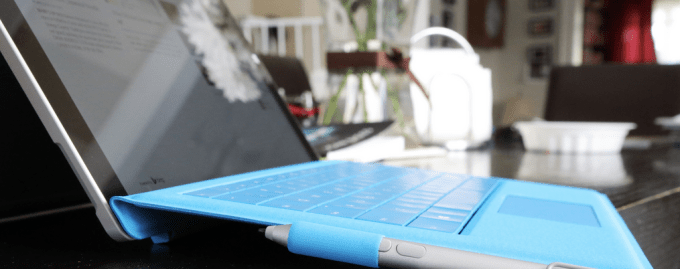
Microsoft released a set of updates for its Surface Pro 3 tablet today,  including fixes for the tablet-hybrid’s Wi-Fi connectivity, a part of the device’s performance that some have flagged as problematic. I’ve had some Wi-Fi issues with my loaner Surface Pro 3, but haven’t been sure if they stem from Windows 10′s nascency, or the device itself.

Paul Thurrott noted “ongoing issues many users have with Wi-Fi on Surface Pro 3″ in a post today on the patches, implying that there is some level of market discontent that could be solved with the new code.

Here’s Microsoft’s description of the changes, in an entry released before the code itself shipped:

Wireless Network Controller and Bluetooth driver update (v15.68.3066.135)

  • Enables better throughput after waking from sleep and connecting to an 802.11AC network.

  • Ensures Infra scan list is not empty while connected to a wireless display adapter.

  • Resolves an issue connecting to Cisco 1242 access points.

  • Ensures device reconnects properly to a hidden SSID using a 5Ghz DFS channel after waking from sleep.

  • Adds customer-requested functionality to prefer 5Ghz connections when both a 2.4ghz and 5ghz connection are present with the same SSID.

Later today I’ll update my Pro 3 and see if it solves the intermittent issues I’ve been having. As an aside, I don’t meant to sound overly negative. Wi-Fi has been the only sticking point I’ve had with Windows 10 and the Pro 3 thus far in using them together. Well, aside from Windows 10 occasionally doing some thing silly, but, again, it’s preview code, so you have to take quirks in stride.

Microsoft’s Surface project brought in $908 million in revenue in the last quarter, and inched towards profitability. The company expects sequential-quarter unit volume to rise in the current period.

Prizm Plays Music You Like To Transform Your Living Room Into Your Favorite Coffee Shop

Remember the last time you went to the same coffee shop or bar because the staff tends to play music you like and you don’t have to pick the next song? Prizm is a neat little pyramid add-on for your sound system to transform your living room into this coffee shop you like. The French startup is just beginning the last week of its Kickstarter campaign of its $129 smart music player for your home.

If you want to use Prizm to play music, you just have to press the play button and that’s it. Prizm will stream music directly from Spotify, Deezer and SoundCloud based on your favorite genres and tracks. You don’t have to launch anything on your phone or computer. It’s like a physical Pandora-like service for your home.

“The key advantage compared to existing solution is that Prizm is both instant and context-aware,” co-founder Pierre Gochgarian told me. “Our device automates what every music service tries to do with their playlists — ‘Wake Up’, ‘Dinner Party’, etc.”

Behind the scene, Prizm detects who is in the room using the Wi-Fi and Bluetooth signals from your phone. If someone else is home as well, Prizm will adapt the track list to find songs that suit you both.

You can like a track or skip it, making Prizm learn more about your tastes over time. And if you’re sitting across the room, there will be an optional mobile app to control Prizm.

Now, Prizm has some limitations as well. For example, you can’t use Prizm to simply stream music to your stereo using AirPlay, Spotify Connect or Chromecast. For now, it’s all about the hands-off listening experience. Gochgarian told me that the team was considering adding AirPlay and Spotify Connect support.

But there is one feature that I particularly like. Prizm will also listen to its environment to know if there are many people ready to party, or if it’s a quiet dinner with a few friends. This way, it can play some music that will suit everyone’s mood.

Logitech’s New AnyAngle iPad Case Gives It A Surface-Style Kickstand

Logitech is slowly but surely turning the iPad into a Microsoft Surface – which is good news for those who envy some of the Windows device’s productivity features, but not its software or overall form factor. The new Logitech Keys-To-Go feels a lot like the keyboard included in the Microsoft Type Cover, and now there’s a stand/case called the AnyAngle that essentially mimics the Surface’s variable inclination kickstand.

The AnyAngle will provide protection to your iPad, with a front cover flap, full coverage of sides and edges, and a back panel with a see-through window so that you can enjoy your huge expanse of gold, silver or space gray even with the case on. The iPad Air 2 fits in it snugly, and yet is also easy to remove and insert whenever you want. Passthrough buttons give you access to all switches, and openings let you charge, take pics and get sound from the speakers.

AnyAngle’s multi-material front cover provides a nice bit of visual flair, and a folio-style look that should suit office use, and the key feature here is the folding kickstand that’s clearly aimed at productivity nuts. You can adjust it to prop up your iPad at an analog range of different stances, with the motion of the stand combined with flipping your gadget altogether.

AnyAngle’s prop powers make it a formidable companion for frequent travelers, and for those wanting to type with the Keys-To-Go, Apple’s own Wireless Keyboard or any other BT companion input device that doesn’t come bundled in a case of its own. It’s nice having the option to either use it with or without keys, too.

The AnyAngle still feels like it adds a decent amount of bulk to the iPad Air 2, however, and it costs $59.99 on its own. It’s cheaper than a keyboard case if you just want a case, and no keyboard, or if you just want a keyboard, it’s cheaper to get the Keys-To-Go than a keyboard case – but if you want both all the time, a keyboard case is a better option. If you’d rather have choice, or just one or the other, Logitech’s new lineup has you covered.

TC Droidcast Episode 27: Nexus 6 Is Too Big And Nokia N1 Is Too iPad

This week on the Droidcast, it’s Darrell Etherington, Greg Kumparak, and Engadget’s Chris Velazco, and we’re talking in more detail about the Nexus 6 now that the full reviews are out. Bottom line: It’s big. We also tackle Nokia’s return to hardware with an Android-powered tablet, and Google’s acquisition of an iOS prototyping company.

Next week, we’ll have more to talk about in terms of the first devices beyond the Nexus program to get a taste of Lollipop, including the M7 and M8 HTC One GPE smartphones and the Nvidia Shield Tablet.

Subscribe on iTunes and check out past episodes directly on TechCrunch.

Download it directly here: http://traffic.libsyn.com/droidcast/droidcast-27.mp3

Dyson Invests $2.35B In R&D, Aims To Launch 100 New Products Over The Next Four Years

Dyson is spending big on new products and product categories, the company announced today. The maker of vacuums, fans, heaters, hand dryers, robots and more announced today that it would be spending a total of $2.35 billion across a UK tech campus, expansion of its manufacturing efforts, investment in British universities to foster talent, and $1.56 billion in new specific tech development projects.

The British company wants to roll out no fewer than 100 new products, across four new tech portfolios over just the next four years – we’ve already seen it introduce the 360 Eye robot vacuum cleaner this year, as well as announce its entry into the humidifier market, with a device that simultaneously filters bacteria out of the air while it works. In past interviews, founder and CEO James Dyson has hinted that the company might be interested in applying the work it has done in battery tech to other areas, too, and continuing to advance the field of domestic robotics.

Dyson says it folds a full one-third of its total profits back into R&D, and notes that 2,000 of its roughly 4,500 employees worldwide are engineers, and 1,000 of those have come on board in the last four years alone. Its partnerships with academic institutions also help it funnel new talent into the company, as well as work out outside research projects.

With this investment, Dyson is signalling a shift that could mean we no longer see it primarily as a vacuum company in four years’ time. Could it instead become synonymous with domestic robotics? Early yet to tell, since the Dyson 360 Eye has yet to even go on sale, but should arrive this coming spring beginning in Japan.

GoPro Craters 9.3% After Pricing Its Secondary Offering At A Discount

GoPro fell more than 9 percent today, after it priced its secondary offering at $75 per share, a discount to its market price. The company ended regular trading today at $71.74 per share, or a several dollar negative delta to the proposed price.

The company will sell 1,287,533 itself, while prior shareholders will sell 9,072,967. Underwriters of the sale may purchase 1,554,075 shares as well inside of a 30 day period. So, dilution to GoPro investors won’t be too heavy, but certainly seeing current shareholders get rid of more than 9 million shares worth — at the proposed $75 price — $680,472,525, doesn’t inspire confidence.

In fact, you almost wonder why the company is raising new capital for itself at all. GoPro ended its last quarter with $237.7 million in cash and equivalents. The proposed sale of new equity would add just under $100 million to its accounts.

GoPro has had a wild ride in the public markets since its debut. Priced at $24 per share, the company has traded as high as $98.47. You can see the spikes and declines here:

CHART

I called the company’s listed contact concerning the secondary offering, and left a message asking about potential pricing changes for the secondary offering, given the company’s steep slip in value over the past few days.

IMAGE BY FLICKR USER PETE PRODOEHL CC BY 2.0 LICENSE (IMAGE HAS BEEN MODIFIED)

This Week On The TC Gadgets Podcast: Nokia N1, Intel MICA, And The New Parrot Drone

News is picking up in time for the holiday season, with Nokia announcing the Android-powered N1 tablet. Meanwhile, Intel got into the fashion game with the new MICA data-connected bracelet, complete with a Sapphire OLED touchscreen. Plus, Parrot just released its latest drone, and Matt can’t get enough of it.

We discuss all this and more on this week’s episode of the TC Gadgets Podcast featuring John Biggs, Matt Burns, Darrell Etherington, and Jordan Crook.

Have a good Friday, everybody!

We invite you to enjoy our weekly podcasts every Friday at 3 p.m. Eastern and noon Pacific. And feel free to check out the TechCrunch Gadgets Flipboard magazine right here.

Click here to download an MP3 of this show.
You can subscribe to the show via RSS.
Subscribe in iTunes

Intro Music by Mendhoan.

November 12, 2014

Amazon Is Expanding Its R&D In Cambridge, U.K., With A Focus On Prime Air Drones And Speech Tech

Amazon is expanding its R&D operations in Cambridge, U.K., with a plan to staff out a large research lab — expanding on the foothold it acquired when it bought Cambridge-based speech tech startup Evi Technologies two years ago, TechCrunch has learned.

Cambridge is feted for its world-class university which, in turn, acts as a hub for concentrating science and technology talent, naturally leading to many startups spinning out from it. Amazon is evidently hoping to grab itself a larger slice of this local talent. A source familiar with the company’s plans told TechCrunch it will focus on Prime Air, its autonomous delivery drones project, and on beefing up its speech tech R&D team.

The e-commerce giant has been staffing up for Prime Air over the summer, including seeking hires in Cambridge. It has continued advertising for Prime Air positions in the U.K. university town this fall, including a Flight Operations Engineer role posted this month, a Site Leader role posted in October and a Senior Research Scientist role posted in September. The latter asks for “experience applying machine learning approaches to complex problems,” among other skills.

Amazon’s expanded Cambridge presence will also see it tool up its speech group significantly, tapping Cambridge’s pull and talent pool here too. Job roles Amazon is currently hiring for under an Evi Technologies Limited company listing include a Quality Assurance Engineer, a Senior Technical Program Manager and various software developer roles.

One software dev testing role job ad notes: “Our testing involves verifying a rapidly changing and growing knowledge base answers our customers’ questions as quickly and accurately as possible across many different services.” Another role within the same Evi hiring group refers to working on “brand new projects using cutting edge technology.”

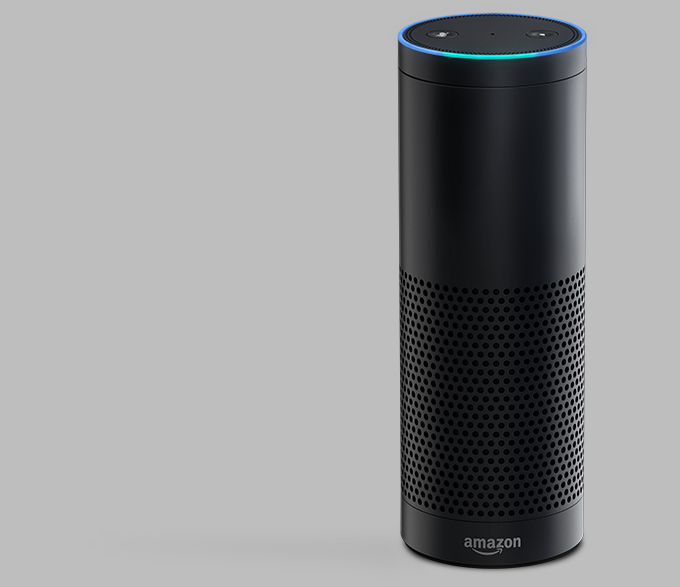
Why speech tech? Earlier this month, Amazon unboxed Echo: a connected speaker with an always-on, voice-activated assistant linked to other Amazon services, such as streaming music playback. So it’s not a huge leap to see Amazon pushing Echo into a fully fledged voice-activated shopping portal, with making a purchase made as frictionless as saying “order me Taylor Swift 1989″ — assuming the voice-recognition technology in question is up to snuff. Hence Amazon ramping up its R&D in speech recognition.

amazon-echo

Other possible research areas that could play to Amazon’s retail interests, and that have existing researchers and startup players located in Cambridge, include computer vision technology and augmented reality — technologies that offer to spice up the online buying experience in other ways.

Amazon is not the only tech giant that’s been connected to Cambridge recently. Earlier this week Apple was linked with the city, with rumors suggesting the company might be looking to establish an office there, possibly with an R&D component. Google has also previously been rumored to be interested in setting up a base in the city, although TechCrunch’s source suggested Mountain View’s interest in Cambridge may have waned for now. Other tech giants already have long established R&D labs in the city, including Nokia and Microsoft.

We’ve asked Amazon for more details on its plans for its expanded Cambridge research lab and will update this post with any response. Currently the company lists U.K. development centers in London and Edinburgh, working on digital media R&D and new technologies for its global websites, respectively.

Should Microsoft Build Hardware?

So what’s this new Microsoft strategy you’ve been hearing about?

According to CEO Satya Nadella, the company is three things: Office 365, Windows and Azure. “That’s it,” the executive recently quipped. Given that narrow focus, how do the company’s massive and recent bets on hardware fit into the picture?

Microsoft has poured billions in its Windows Phone project, even before you take into account its purchase of Nokia’s hardware assets. And Surface has been a damn expensive project, though one that has been showing some stronger signs of life in the most recent quarter.
Screen Shot 2014-11-11 at 12.49.02 PM

We recently sparred over whether Microsoft’s hardware strategy makes a wit of sense. Should the company get out of the hardware game and go all in on services or does its hardware play make sense — especially since it’s put so much money into it?

Ron Miller is up first:

If Microsoft Wants To Be A Services Company It Needs Total Focus

Microsoft has been making moves lately that suggest it wants to be a service company, but if that’s the case, it’s going to take total focus.

For example, last week, Microsoft surprised some people when it announced a deal with Dropbox to embed Dropbox storage inside of Office and allow Dropbox users to edit documents from Dropbox. Microsoft has services that do this, and the old Microsoft would have protected that internal business over any other business opportunities. But this isn’t the old Microsoft. It’s the new service-focused Microsoft and it intends to go where the users are, regardless of what impact that has on its own products.
Screen Shot 2014-11-11 at 12.53.00 PM

In another example, this spring Microsoft announced a deal with Salesforce.com around its CRM tool. Once again, Microsoft has a CRM service in Microsoft Dynamics, but it ignored its own products, because it wanted to put the platform over the product (or the many over the one as Spock might say).

If you’re beginning to sense a pattern here, you’re absolutely correct. As my colleague Alex pointed out in a series of posts recently, Microsoft is trying to get leaner and more focused, so it’s putting its eggs in one of three baskets: Windows, Office 365 and Azure — a core OS, a software service platform, and an infrastructure platform, respectively. That’s it.

It’s actually a brilliant plan if they stick to it, but they seemingly can’t let go of some things that are getting in the way of succeeding.

If those three pieces are truly the core of this new Microsoft, they need to get out of the hardware business because it doesn’t really fit any of those buckets, does it? When you look back at Microsoft’s hey day, it was successful (all antitrust business aside) because it concentrated on what it did well.

It was a Windows/Office business with some nice enterprise pieces such as Windows Server, Exchange Server, Active Directory and so forth. What you didn’t see was Microsoft-branded PCs and servers. Microsoft created a core set of products and let everyone build stuff on top of that and it was tremendously successful. They fed the hardware and software ecosystem and didn’t try to compete in any direct way with their OEM channel.

(And yes I know they made keyboards and mice, but that was a small part of the business.)

Today, Microsoft is trying desperately to sell phones and tablets. It has no business doing that if it truly wants to stick to that core mission. Sure, the numbers have gone up nominally last quarter and every Microsoft fan let out a loud cheer and let everyone know it, but ultimately when you look at the numbers, Microsoft isn’t even on the radar of companies like IDC who track tablet sales and they barely register on the phone side.

What’s the point of wasting time and resources producing these devices if they aren’t central to the services mission, and they aren’t central to that mission. You could argue of course that Microsoft needs these devices for its mobile strategy to work, but what it needs is to get more hardware companies interested in the platform and the services that run on it.
Screen Shot 2014-11-11 at 12.49.15 PM

And as for Xbox, yes it’s much more successful in its market, but it has absolutely nothing to do with the core mission. Sorry. I don’t see a place for it in the new Microsoft and if Microsoft were smart, they would spin it off or sell it.

As R Ray Wang from Constellation Research told me last spring after the Microsoft-SFDC announcement, for Microsoft everything now comes down to the platform. “If you view Microsoft as a platform company, they will make decisions [from now on] in the interest of the platform,” Wang told me at the time.

And if that’s true, Microsoft needs to get out of the hardware business, and soon.

Next up, Alex Wilhelm:

You Don’t Back Half A Horse

Ron is correct to state that Microsoft is a services company now, or at least a company that has charted a path in that direction. I don’t completely disagree with his analysis from my own perspective, but I do think that there is a bit of a dissonant nuance at play when you take into account Microsoft’s broader strategy, as best as I can understand it.

Broadly, I think that hardware can be viewed in a support role to the company’s primary efforts, and that the company is pretty well pot committed, to a certain extent. Also, the company is finally seeing cracks of sunlight in formerly dim financial results.

First up, the three core points of Microsoft appear to be set: Office 365, Azure and Windows. Microsoft CEO Satya Nadella recently stated that he views Windows 10 as a service, so that makes the company’s three core efforts each land decidedly in the services column.

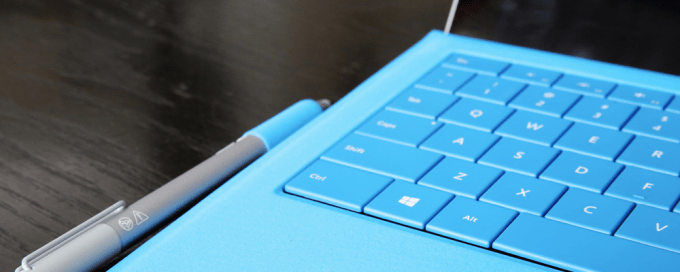
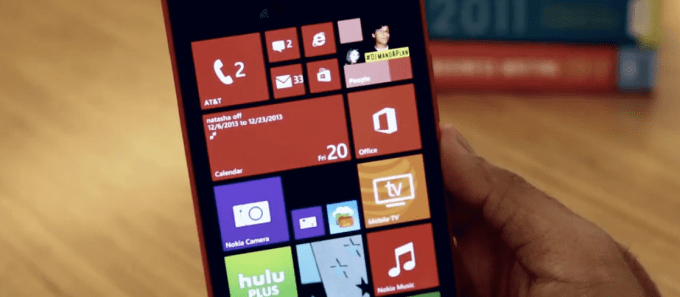
Hardware fits into this in three ways: Without its Windows Phone business, there is no Windows Phone-as-a-platform. If it abandons Surface, it would leave behind a nearly profitable business that does a fine job showcasing Windows, and provides a template for its OEM partners to build better hardware; and if it did drop hardware altogether, it would greatly deprecate its gaming efforts.

Screen Shot 2014-11-11 at 12.52.51 PM

Why would it matter if there is no Windows Phone, given the hardware line’s limited sales, when compared to iOS and Android? It appears that Microsoft is betting that when Windows 10 comes to fruition, and Windows Phone becomes a full member of the Windows family, it wants to make a developer proposition that extends from the smallest screens to the largest — build once deploy everywhere I’d think works better when your “everywhere” is largest.

A short aside to gaming here is useful: Gaming is the largest and most popular category of apps on Windows Phone. If Microsoft walked out of the hardware game, there would essentially be no Windows Phone handsets in the market, and thus there would be no Windows Phone unit volume, and thus sales and downloads of games would begin an inexorable decline. So, if Microsoft leaves hardware, attention from gaming developers that it wants very much for Windows 10 would be cut. That would be tough.

Moving forward, regarding Surface, I agree that if the business had failed to produce a better-selling device in the Surface Pro 3, the project would have been a decent candidate for cancellation, simply because it had minor revenues — when compared to the larger Microsoft top-line segments — and therefore less importance. Also keep in mind that Surface, in terms of unit volume, is a slim slice of total PC volume, making it not mission critical for the PC market in terms of short-term survivability. However, the Surface Pro 3 has done two things: Grown Surface revenue greatly while moving closer to GAAP profitability, and has provided a reference design for how to build touch-PCs that are useful in the Windows 8+ context.

Given that, why cut it loose? The company expects sequential quarter unit volume growth it said in its earnings, so we could see even higher revenue in the current quarter. Why cut a nearly profitable business that could do more than $3 billion a year in top line?

Regarding Xbox, the chance that Microsoft does away with it is nil to begin with, but it is worth noting why: It has massive buy-in among younger users that might not otherwise have lots of experience with Microsoft products, which could help the company gain mindshare among the people down the road that are likely to buy computers.

And again, the gaming bit: If Microsoft dropped its Xbox business, it would greatly harm its relationship with gaming companies, firms that will be able to quickly and easily deploy their titles across the unified Windows 10 platform, where the company would love to see popular Xbox titles land to help support the unified Windows Store.

Surface almost makes money, Phone will lose money for only another fiscal year or so, and Xbox is a hit for the company. And, given that each supports the key coming Windows 10 platform, and leans on the company’s Azure computing service — making them useful customers, if in-house — I don’t think that they are on the chopping block.

If gobs of money are hemorrhaged, expect cuts. But for now, Microsoft has spent something in the neighborhood of $10 billion — using back of the envelope math — on buying Phone, Phone losses and Surface losses, not to mention Surface development costs pre-launch. You just don’t throw that away.

Don’t aQuantive things that might work, bro.

Featured Image: Microsoft

TC Droidcast Episode 26: Moto Rules With Droid Turbo And Nexus 6

This week’s Droidcast features Darrell Etherington, Chris Velazco, Greg Kumparak and Kyle Russell, and we discuss the looming Nexus 6, as well as more Motorola with the Verizon-exclusive Droid Turbo. Also up for debate are the merits of Samsung’s own-review of the Gear S, which heralds a new low in content marketing, and the Chromecast’s ability to play games, and whether people will ever do that in any sizeable numbers.

Generally speaking, we’ve got lots to discuss next week with more detail on the Nexus 6, as well as Android Lollipop and how it works on phones, but email us directly if you have a suggestion for something to cover on the show.

Subscribe on iTunes and check out past episodes directly on TechCrunch.

Download it directly here: http://traffic.libsyn.com/droidcast/droidcast-26.mp3