Pages

March 31, 2017

Windows has a heart of trash

I did a bad thing. I opened a bad file and it borked my PC. So now, in concordance with the grand tradition of frustrated tech bloggers calling on enormous companies to conform to their wishes, here is my rant on how terrible computers are — Windows ones, this time anyway — and how they ought to be.

Now, I’m no PC spring chicken. I build my desktops, I seat the CPU, I fiddle with the registry and fiddle with the BIOS (even though it isn’t really a BIOS any more). Most importantly, I use Winamp. I’ve cleared out more than a few malware infections, worms, trojans and the like on my own computer and others — it’s just part of the whole cool lifestyle I lead.

This time was different. For one thing, it was the first time I’d dealt with this stuff on Windows 10. Normally I’m pretty careful, but I was just lazy this time. And the malware itself — WinVMX as far as I can place it — was perhaps more sophisticated, as well. (I don’t recommend you try your luck.)

But as I was methodically eliminating the various sub-services and adware the original attack had installed, I found myself grappling with a second adversary: the immense ball of trash that exists at the heart of every Windows install.

Party like it’s 98SE

I don’t mean to slander Microsoft’s engineers here. Windows is perhaps the most complex piece of software ever built. It’s just that it’s like a rubber-band ball of versions, updates, patches, aborted toolsets and standards, and so on. They’ve never stopped adding to it, and while some of the examples of consistency and reliability are beyond compare — running the same version of DOOM on 25 years of OSes is great, and hints at why Windows is so hard to leave behind for so many — it’s really gotten to the point where the cart is going before the horse. And also the cart is full of trash.

Related Articles

The latest Windows 10 Creators Update preview gets a blue light mode and browser upgrades Apple releases iOS 10.3 as well as macOS, watchOS and tvOS updates Microsoft CEO Satya Nadella on how AI will transform his company
In going through the various systems and recovery methods I found so many things broken or misleading, so many critical system items compromised, hidden, or neglected, so many dead ends built in, so many workarounds from the ’90s that still worked and present-day tools that failed utterly, so many contradictions and redundancies — that I finally have flipped over to the side that believes Microsoft needs to cut this trash cart loose.

I’m not suggesting they abandon Windows or anything absurd like that. But for the love of God, I shouldn’t have to be using DOS commands I learned on my friend’s 386 to get the computer to boot normally. I shouldn’t be told that Windows can reinstall itself, then watch as it fails to even launch the tool that does so (it had been deleted [!]). I should be told when it tries again and formats the wrong drive without prompting. (Yes, I do back up my files, thanks for the suggestions.)

Why do I have to search through “legacy” control panels to find disk management? Why are there two sets of control panels in the first place? Why is the first thing I’m told when reinstalling Windows, that if I am reinstalling it, to say I don’t have a product key? Why does the installation process employ terminology and interfaces that are actively hidden from users in the OS itself?

Lipstick on a pig (that’s eating trash)

In a lot of ways, Windows 10 is great. I plan to continue using it. It was rightly lauded for striking a happy medium between the exposed nuts and bolts of XP or 7 with the modern conveniences and interface of 8. (I still think they should have called 10 Windows One, à la Xbox and OneDrive). I think keeping this compromise alive is important, especially as their rival Apple continues their practice of circling every square and removing every vestige of meaningful user choice.

But the company isn’t half done. They made the sensible decision to work from the outside in, because you don’t leave something like Windows 8 alive for long, and they made the surface layer of the OS more than palatable. But beneath that surface is decades of cruft, features and code that, while once necessary or even innovative, have been compacted with time and great pressure to create… yes, a hot ball of molten trash.

Of course, Microsoft is stuck between a rock (a small one, me) and a hard place (millions of customers who rely on legacy systems in one form or another). So much depends on little nuggets buried deep in the garbage fire that they can’t throw it all out at once. But who are they going to detail to audit a hundred million lines of code to find them and save them? Then, on the other side, how long can they keep shipping a product that’s deeply compromised by carrying this burden, which wrecks user experience and increases the hackable surface area by orders of magnitude?

I realize I’m not the first one to say this, and I’m pretty sure I won’t be the last, but it’s worth saying nevertheless (plus, I’m angry because my desktop is still dead). Many people smarter and better informed than me work at Microsoft, and they have certainly been contemplating this problem for longer than I have. I hope that part of Microsoft’s new direction is freeing Windows from the fetters of its previous iterations, but with the knowledge that hidden among the links of those chains are jewels worth salvaging.

Featured Image: ronstik/Shutterstock
March 28, 2017

Apple releases iOS 10.3 as well as macOS, watchOS and tvOS updates

It’s patch day at Apple. The company just released four new versions of its four operating systems for all its devices — iOS 10.3, macOS 10.12.4, watchOS 3.2 and tvOS 10.2. Some of those updates are more important than others.

Let’s start with iOS 10.3. The new version adds Find My AirPods, and we already covered what you can expect from the new feature. You can see them on a map if they’re connected to an iOS device or you can play an alarm if you have an AirPod hidden below a stack of magazines. And if they’re not around, you can see the last location when your phone was connected to your AirPods.

With iOS 10.3, Apple is rethinking ratings in the App Store with native review prompts and the ability to reply for developers. iOS 10.3 also adds a couple of new Siri features, such as cricket sports scores. There also are various improvements, such as a thread view in Mail and dynamic app icons.

Finally, Apple is secretly updating all iOS devices to APFS, a new file system. This should be completely transparent for the user, but it’s a major change as this new file system has been designed from the ground up to work with mobile, always-on devices with flash storage.

In watchOS 3.2, Apple is finally updating Siri to let you use Siri with third-party apps, just like on your phone. For instance, you could order a Lyft or call someone using WhatsApp from your Apple Watch. There’s also a new Theater Mode button so that the screen remains dark in a movie theater.

On macOS, Apple is bringing Night Shift. Just like f.lux, it favors warmer colors at night. This should allegedly improve your sleep. Real-time collaboration in iWork on macOS and iOS is out of beta.

tvOS 10.2 doesn’t add much except the ability to rent a movie on an Apple device and watch it on another, such as your Apple TV. This is a long-overdue feature.

As always, you should backup your device to iCloud or your computer before updating. This is particularly true for your iOS device, as the new file system is a big change.

Head over to the Settings app on your iPhone or iPad to update. Open the Mac App Store for the macOS update. Open the Watch app on your iPhone for the Apple Watch update.

Wanna hack your car? Macchina is a plug-and-vroom solution

You can hack your IKEA furniture to be more awesome. You can hack video games to make your fellow gamers hate your guts. And with the help of Macchina — now on Kickstarter — you can teach your car a few new tricks, too. What could possibly go wrong?

Banana for scale

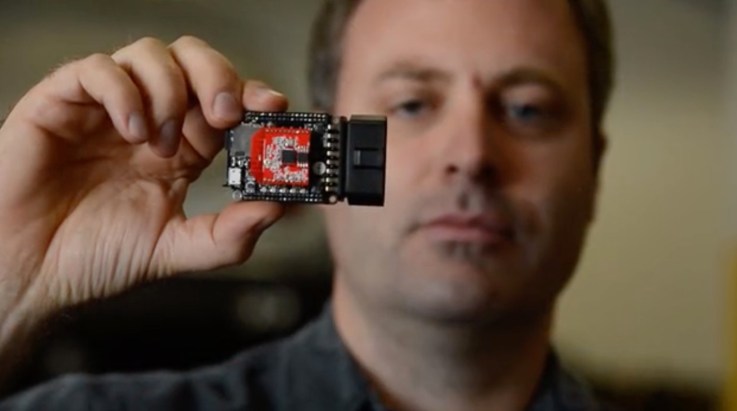
Macchina is a little device that plugs into your car. Nothing revolutionary so far; Automatic has been offering that for years. What is new, however, is that Macchina’s little wonderchild can read and write to your car’s ECU. Which means it can be used not just to figure out what is happening in the dark, mysterious crevasses of your car’s intestines… It also can be used to change things. Suffice to say; it’s probably a good idea to know what you’re doing before you start changing numbers.

Macchina is based on the Arduino Due platform, which means there are a ton of code examples there.

Related Articles

Laying a trap for self-driving cars Leaked internal Uber documents show rocky self-driving car progress BMW's self-driving car will aim for full Level 5 autonomy by 2021 Intel buys Mobileye in $15.3B deal, moves its automotive unit to Israel Toyota's new autonomous test car 2.0 is a tricked out Lexus
“This is a fantastic development platform built for newcomers and professionals alike,” the team says, although, as hinted at before, it would probably take a particularly steady fingered novice to want to take the risk of changing too much right off the bat. The team is also committed to making both hardware and software open source.

The device is designed to be a comprehensive platform, and can be connected to a number of peripherals, including Bluetooth, Wi-Fi, Ethernet and cellular networks via break-out boards.

Overall, it’s one of those tremendously exciting projects that could completely turn the car peripherals world inside out, at a price-point that makes a lot of sense, too. The campaign has raised almost 5x its $25,000 goal, so it’s looking pretty good for now. Of course, it’s still a Kickstarter campaign, so caveat emptor, but damn if this isn’t a mighty tasty project…

March 22, 2017

New iPad models being tested around Cupertino, logs show

Several new iPad models have been spotted being tested in Cupertino and nearby locations, according to mobile marketing firm Fiksu — potentially confirming earlier rumors of a planned iPad refresh arriving this spring. According to reports, a leaked investor note from KGI Securities analyst Ming-Chi Kuo indicated that Apple is expected to update its 12.9-inch iPad Pro model, as well as introduce a new 10-inch or 10.5-inch model with a narrower bezel along with a budget-friendly 9.7-inch option.

According to Kuo, the two larger models will sport an A10X chip — a version of A10 chip found in the iPhone 7 — while the low-cost device will use the A9 chip found in the iPhone 6s. The A10X will be manufactured by Taiwan Semiconductor Manufacturing Co., and the A9 by Samsung, he also said. Not mentioned in his note is the Apple iPad mini.

Rumors this week point to a possible iPad event in April.

Fiksu’s raw data is showing four different iPad models, but that doesn’t necessarily mean four new devices will arrive. The company says it saw the same number of devices tested before the release of the last two iPad Pros, which means we could potentially see anywhere from two to four new iPads soon hitting the market, it estimates.

The data comes from Fiksu’s tracking and attribution SDK, which is used by thousands of mobile __apps today. As part of Apple’s testing process, it installs a variety of __apps — from popular ones to the more obscure — which inevitably ends up including some apps that has Fiksu’s tracking in them.

Each type of iOS device has a different model name, explains Fiksu. These are generally sequential, the firm says. About a month ahead of the most recent iPad Pro launches, it saw internal model names “6,3/6,4” and “6,7/6,8” being tested around Cupertino. This time around it’s seeing “7,1” “7,2,” “7,3,” and “7,4.”

There are only a handful of these devices appearing in its logs, Fiksu found. (See chart below)

Device | Count

iPad 7,3 | 5
iPad 7,4 | 10
iPad 7,2 | 11
iPad 7,1 | 17

All the usage is from the greater San Francisco Bay area, including Cupertino and nearby locations. The usage was also spread across a range of generally popular apps, like games, music, real estate and weather applications. Another indication that these could be the new iPads is the fact that they’re all running a mix of the latest beta of iOS (iOS 10.3) and the unreleased version iOS 11.

The testing began in September, but it wasn’t until recently that the number of devices reached a point where Fiksu became confident that a release date is imminent.

The launch of new iPads is important to Apple, given the current year-over-year decline in iPad sales. As Recode noted in January, Apple sold 13.3 million iPads, according to its recent quarterly earnings report, generating $5.5 billion in revenue. That represented around a 19 percent drop in units sold, and a 22 percent drop in revenue from the year prior.

As Fiksu explains, part of the problem is that people don’t upgrade their iPads as often as they upgrade their iPhones. In fact, the first four full-size iPad generations and the original iPad mini — all of which launched between 2010 and 2012 — still account for over 45 percent of iPad usage, its trackers show.

With the release of new models, Apple could encourage users to abandon their old devices for those with newer technology or new features. Kuo’s earlier note about the devices suggested that the budget model could move more units — potentially between 50 and 60 percent of sales, he said.

Of course, until Apple makes a formal announcement, nothing is for certain.

March 19, 2017

Miner Finds Enormous 706-Carat Diamond, Promptly Hands it Over to the Government

Miner Finds Enormous 706-Carat Diamond, Promptly Hands it Over to the Government
science Image Credit
Continue reading
Image: AP

A pastor and independent miner in Sierra Leone has unearthed an uncut 706-carat diamond estimated to be worth tens of millions of dollars. The pastor turned the diamond over to the government in hopes that the proceeds from its sale will help the impoverished nation. But given the history of this former "blood-diamond" nation, what happens from here is anyone's guess.

Discovered by artisanal miner Leone Emmanuel Momoh in the diamond-rich Kono region, it's the largest uncut diamond found in Sierra Leone in more than four decades, and the second largest diamond ever found in the country, according to a report by the Associated Press. In 1972, a 968.9-carat diamond was found in Sierra Leone that eventually sold for $2.5 million. The value of the new alluvial diamond, rated at 706-carats, has not yet been determined, but it will likely fetch tens of millions of dollars at auction.

Sierra Leone's Minister of Mines and Mineral Resources Alhaji Minkailu Mansaray holds the diamond during a meeting with delegates of Kono district, where the gem was found. (Image: AP)

Momoh, who is one of thousands of workers who pan for gems, handed the diamond over to a local chief, who in turn gave it to President Bai Koroma on Momoh's behalf. The pastor said he gave the diamond to the government in hopes the proceeds will be used to fund ongoing infrastructure improvements in the impoverished Kono District. The government plans to auction the diamond, and take a four percent cut. Momoh himself is entitled to the lion's share of the proceeds, but it's not clear what he plans to do with the money.

President Koroma thanked the chief for his actions, and for not smuggling the diamond out of the country. He described the diamond as "a gift from God," saying "it will be a terrible thing if anyone tries to do something criminal with it."

The precious gem is now in Freetown's central bank vault awaiting valuation under the Kimberley Process , which certifies diamonds as being "conflict-free." This initiative, introduced by the World Diamond Congress at Antwerp in 2000, is an effort to stem the flow of conflict diamonds used by rebel movements to finance wars against legitimate governments. In Sierra Leone, these so-called " blood diamonds " fueled a decade-long civil war in which rebels forced civilians to mine the precious stones, and purchased weapons with the proceeds.

Unfortunately, the Kimberly Process doesn't appear to be working , or at least not as well as hoped. There's no guarantee that diamonds certified by the Kimberley Process are actually conflict-free, due to the ongoing presence of corrupt government officials in many of the countries involved. In some cases, officials accept bribes in exchange for the Kimberley Process certification.

Even if the new diamond gets the Kimberley Process stamp of approval, the citizens of Sierra Leone are already skeptical they'll benefit from the sale. "Previous diamonds have not benefited the people and I wonder how this new diamond will make a difference," noted Jeneba Kallon, a civil servant, in Deutsche Welle .

It's easy to be cynical about the situation, and the fate of the proceeds gleaned from the diamond, but there may be reason for optimism. President Koroma, who is now serving his second democratically elected term, isn't the worst leader in the world. He has led an anti-corruption campaign, opened the country to foreign investors, and has worked to rebuild the nation's infrastructure following the civil war that ended in 2002. As for the country's many government officials and bureaucrats, their potential actions are less clear. According to a 2013 report by Transparency International's Global Corruption Barometer, Sierra Leone has the highest incidence of bribery in sub-Saharan Africa .

As to what happens now, President Koroma has given instructions to the Ministry of Mines stating that "the evaluation, sale, and distribution of the proceeds must be done in the most transparent manner." We'll just have to wait and see.

As for other notable diamond discoveries, the Cullinan Diamond is the largest ever found, clocking in at a whopping 3,106-carats-about 1.4 pounds. This rock, found in South Africa in 1905, was eventually cut into several large gems, two of which appear in the British Crown Jewels. In 2015, a 1,111-carat diamond called the Lesedi La Rona was found in north-central Botswana, making it the second largest ever found.

[ Associated Press , Deutsche Welle ]

Understand Microprocessors By Looking at This Beautiful Blinking 'Megaprocessor'

Understand Microprocessors By Looking at This Beautiful Blinking
sploid Image Credit
Continue reading
GIF: Centre for Computing History

Pretty much everything that's great about technology today is thanks to the microprocessor . Billions of them are manufactured every year and they are one of the many reasons you can read this fine website. But few people understand what's going on inside that little integrated circuit. Here's a crash course.

The fine folks at the Centre for Computing History in Cambridge have a half-ton machine that blows up all of the little details happening in a microprocessor to a size that's more easily inspected. It has been dubbed "The Megaprocessor " and its creator, James Newman, walks us through how it works in the video below.

Newman's creation is cool enough to just admire it on its own. Using about 40,000 transistors and 10,ooo LEDs, it diagrams all of the various communications and number crunching going on inside a microprocessor in order to ultimately __play a big ass game of Tetris.

To really grok the fine details, you'll have to pay a visit to the museum itself and spend some time with The Megaprocessor. But I assure you, in a little less than seven minutes you can understand the basics of what goes on in a microprocessor well enough to fake it at a really nerdy party.

Since many of us can't visit, I highly recommend the CCH's Twitter account . It always has great old school gear and graphics to check out.

[ Centre for Computing History ]

Amazon Alexa arrives on the iPhone

Amazon Alexa arrives on the iPhone
Amazon Alexa Image Credit
Continue reading
Amazon Alexa is one cool AI assistant, and it is sad to see that the bot is locked to Amazon Alexa speakers like Alexa Echo and Echo Dot, however that might change pretty soon.

Starting today, iPhone users can interact with Alexa on the Amazon app for iOS. All you need to do is update your Amazon store app and you’re good to go.

The Assistant is being brought to the e-commerce app for helping people place their orders using their voice. Alexa will be able to search for products, place orders, or request cancellations.

However, along with this, the AI Assistant will also do a few cool things like telling you a joke, informing you about the weather, and answering your other intriguing questions, or at least try to!

Surprisingly, Alexa on the Amazon app can also __play music, as well can control IoT or Internet of Thing devices. This means you can ask Alexa to change the room temperature, or control the lighting, right from your iPhone. However, this doesn’t include locking and unlocking smart locks, as the Door Lock API isn’t coming to Alexa in the Amazon app.

Roomba- the robot vacuum cleaner is also expected to receive the Alexa skill where users can control the robot using Alexa.

Now even though Alexa might be better than Siri, the Cupertino giant’s AI assistant still gets an upper hand due to its closer integration with the operating system.

However, it surely is commendable that Alexa still adds a lot of practicality, while being a part of the Amazon store app. I guess it’s time for Apple to step up its game with Siri in iOS 11.

The update is currently available only for the US markets.

Twitter to allow media firms to directly live stream

Twitter to allow media firms to directly live stream
Twitter Image Credit
Continue reading
Micro-blogging site Twitter will soon allow media firms to post live streaming videos directly into the service, media reports said.

According to a report in the Information on Thursday, Twitter will allow media firms to plug directly into Twitter's software to go live by opening its streaming application programming interface (API) to them.

"Twitter is opening up its live API to media firms. It will also reveal partnerships with firms that provide back-end services for live-video streaming," the report said.

Though media organisations have already been hosting live streams on Twitter, it required partnerships and extensive planning between the two. With the upcoming announcement, Twitter's API will let these organisations go live without using Periscope.

Twitter in partnership with PBS NewsHour on Fenruary 28 live-streamed US President Donald Trump's address to a joint session of Congress.

It also witnesses over 2 million viewers for Thursday Night Football last year live-streamed a boxing match for the first time in partnership with Showtime.

This $150 Console Game Me Every Nintendo Game I've Ever Owned in 4K

This $150 Console Game Me Every Nintendo Game I
reviews Image Credit
Continue reading
Image: Alex Cranz/Gizmodo

I can't remember a time when I wasn't obsessed with retro video games. That's one of the reasons I was so excited about the NES Classic Edition ; it's also why I spent my Thanksgiving documenting how to put together a Raspberry Pi-based mini SNES instead of brining turkeys. But building an emulation console from scratch takes time, and I've was curious if there was a more streamlined, turnkey solution. That's when I happened across a Kickstarter for the Allcade 64-bit , a Raspberry Pi 3-based system in a housing that looked just like a classic Nintendo 64 cartridge. It promises all the cool hackery Pi-vibe with none of the command line or soldering.

I ponied up $162 for the "console" and two Nintendo 64-style controllers (the system with one controller is $150 .) That's about twice what it cost for me to buy the parts for my mini SNES, but I was curious to see if the expense would be worth the time of doing it yourself. So far...it has been.

The Allcade 64-bit looks and feels exactly like a Nintendo 64 cartridge (maybe a little lighter), only with a Raspberry Pi stuffed inside instead of ROM chips. On the bottom of the "cartridge" are two USB ports, a power port, and an HDMI port. Allcade also sells a 4-player "adaptor" for the Allcade 64-bit, which was included with my Kickstarter package. This is basically just a USB-extender, since Allcade got rid of two of the USB ports that ship on a stock Raspberry Pi 3.

Hey, that's not a real N64 cartridge! (Image: Alex Cranz/Gizmodo)

The system boots in seconds to an "Allcade" home screen which shows whatever games available to play. The Allcade 64-bit is running on a customized version of Lakka , a video game emulation system built on top of Linux, but with some settings hidden from user view. The controllers are mapped to work out of the box-a major time saver versus my mini SNES build.

The Allcade comes with one homegrown game to show how it works (a Minesweeper-like platformer), but the real point of this thing is to use it with game ROMs. (This is the part where I point out game ROMs are a legal grey area and you should download games you own physical copies of or that are in the public domain. Be sure to follow the laws in your region etc. etc.)

To get ROMs on the system, I was instructed to put them on a USB thumb drive and then plug that drive into the system. The system is then supposed to be smart enough to recognize compatible file types and load them into the system memory automatically.

Games installed on my Allcade (Image: Christina Warren/Gizmodo)

This worked better in theory than in practice. My Nintendo 64 ROMs had the extension *.Z64 and the Allcade 64-bit would only auto-recognize those with the extension *.N64. My games played just fine on the system, but only from the USB thumb drive; if I removed the drive, the games stopped working. Changing the extension on the files fixed the problem, but that was an unanticipated extra step, and one Allcade can hopefully fix with a future software update.

Diddy Kong Racing on a 4K TV is weird (Image: Christina Warren/Gizmodo)

When it comes to actually playing games, the Allcade 64-bit was tops. It's a little weird to __play 1080° Snowboarding on a 4K TV, and the upscaled resolution definitely doesn't do those 64-bit graphics any favors-making poor Diddy Kong into a monstrous mess of pixels-but I was also playing Diddy Kong Racing in under ten minutes. A feat I never could have managed building my own emulation console. I spent the better part of my afternoon blasting enemies in Star Fox 64 and laughing at Peppy's hijinx before I remembered I actually needed to review the thing.

The performance for most of my Nintendo 64 games was great. Playing Super Mario 64 brought me back to being 13 again and I managed plenty of barrel rolls in Star Fox 64 . Yet it's not perfect. Like any other Raspberry Pi setup, some N64 titles, like Conker's Bad Fur Day , have playback issues. Though playing games from older consoles, such as the Super Nintendo, was near perfect.

And I didn't have to break out a single bit of command line. The beauty-aside from the looks-of the Allcade 64-bit is that it is a total plug-and-play experience crammed into a old game cartridge. This is designed for people that don't want to spend their time configuring their own emulation box. And on that count, it totally delivers. If $150 sounds like a deal for something you could build yourself in a day for half the price than the Allcade 64-bit should be on your shopping list.

README

  • The price is high compared to building it yourself, but it still wound up being cheaper than what I paid for a Raspberry Pi 3 and a poorly-made 3D-printed SNES case.
  • I wish the system would show title information about your games. Lakka supports this, but it doesn't seem to be enabled on this setup.
  • I had to install a software update on my system. The process was a little convoluted, but the instructions were very well documented.
  • The team has tried to de-geek the system as much as possible; this is great for people who want something easy to setup, but can be frustrating if you're a power emulator user.
  • The fact that this Kickstarter arrived on time and as promised makes me hopeful that bigger product runs will be successful.
  • After playing this, I miss my actual Nintendo 64 at my parent's house more than ever.

Why the Hell Does the James Webb Space Telescope Look Haunted?

Why the Hell Does the James Webb Space Telescope Look Haunted?
science Image Credit
Continue reading
Image: NASA/Chris Gunn

One of the most powerful telescopes ever built-NASA's James Webb Space Telescope-is set to make its big debut in 2018. But before it starts scouring distant galaxies, or searching for life around at TRAPPIST-1 , the telescope must undergo quite a bit of testing. Apparently, during "lights out inspections," James Webb gets a little creepy.

On March 15th, NASA posted a spooktacular image of the telescope in the agency's Goddard Space Flight Center in Greenbelt, Maryland. While the figures in the picture are pretty ghoulish, they're actually just technicians performing vibration and acoustic testing, which is used by engineers to ensure that everything stays where it should during the turbulent rocket ride up into space. According to NASA , the contamination control engineer used an ultraviolet flashlight to look for contamination after the vibration test, which set the mood lighting for the spooky shot.

"The people have a ghostly appearance because it's a long exposure," NASA photographer Chris Gunn said. Since the camera's shutter was open for a long period of time, it captured the technicians' movements, making them look like ghosts .

Still, pretty spooky, right?

Image: NASA/Chris Gunn

This spring, NASA will ship the James Webb from Goddard to the Johnson Space Center in California, where it'll undergo further testing. Eventually, the assembled telescope will be shipped to French Guiana, where it's scheduled to launch next October aboard an Ariane 5 rocket. Considering that October is the spookiest month of the year, this is hardly a coincidence.

[ NASA ]